
Top 5 Editorial Picks
Five current picks chosen for distinct deep drop needs — from a sonar-first 7-inch unit to a premium expandable system and our top electric reel. These are editorial selections, not ratings.
As an Amazon Associate, we earn from qualifying purchases.
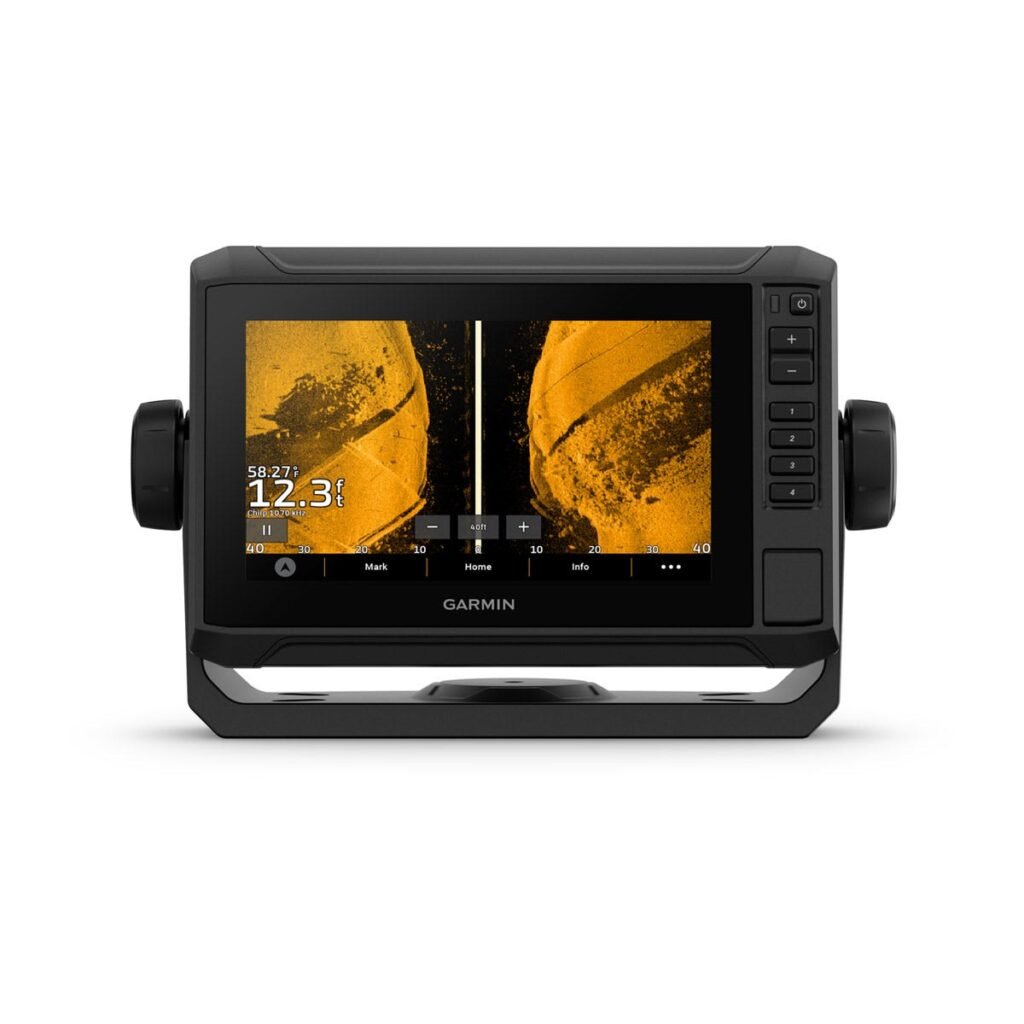
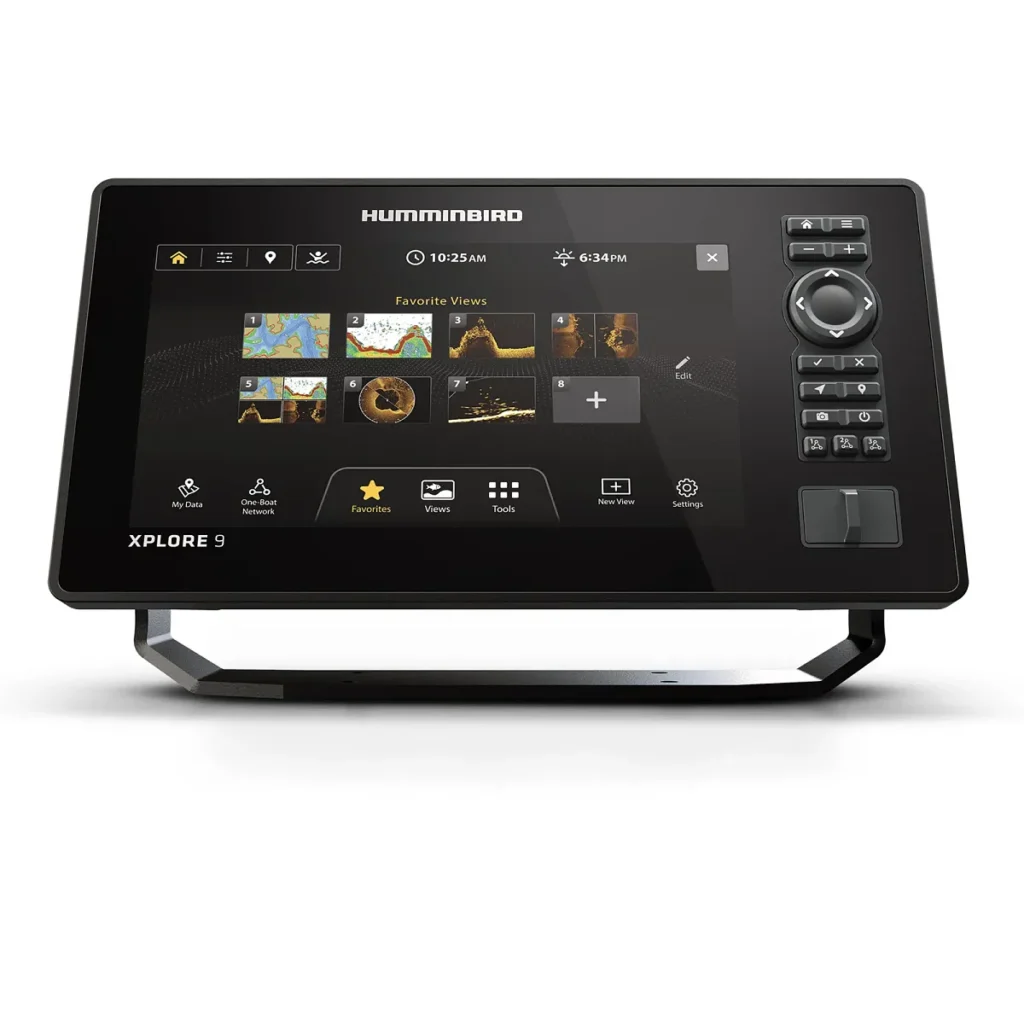
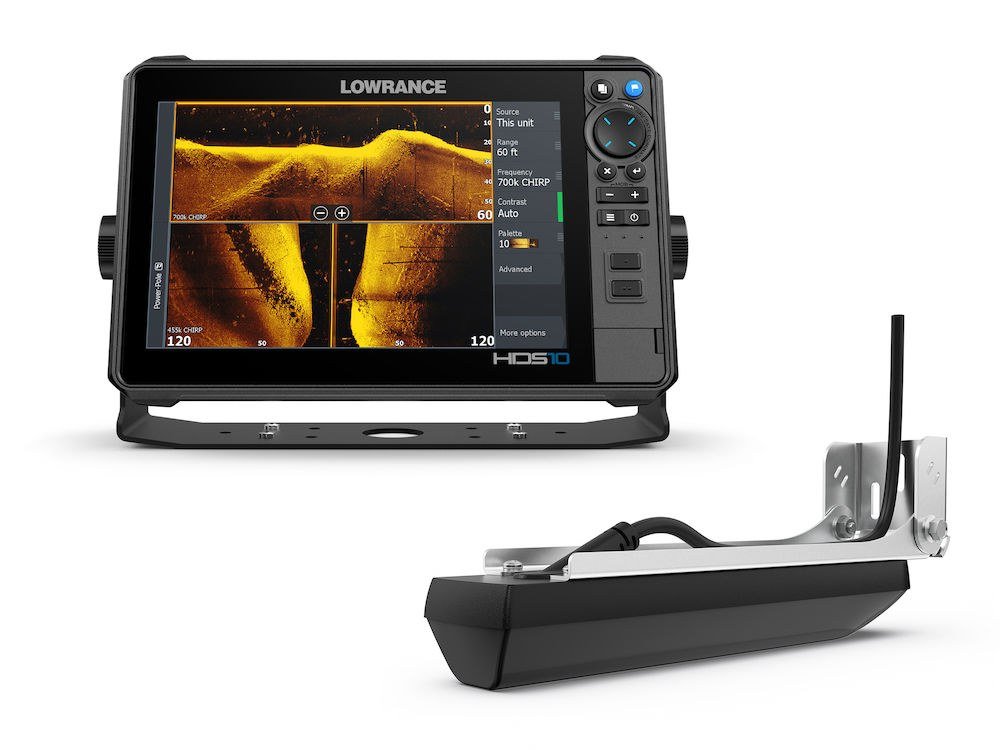
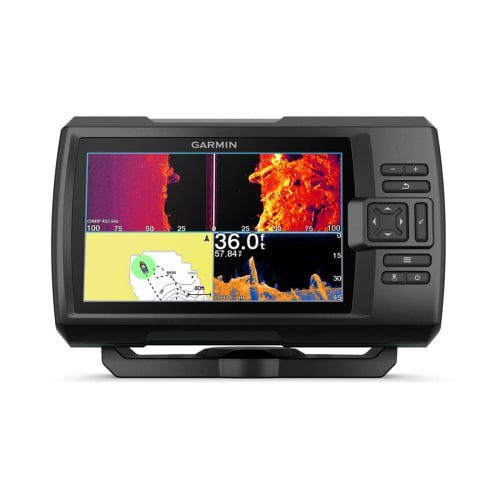
Lowrance Elite FS 9 Review: A Networked 9-Inch Platform With One Big Spec-Sheet Gap
DeepDropFishing.com is reader-supported. When you buy through links on our site, we may earn a commission at no extra cost to you. This review is based on the manufacturer’s published specifications.

Quick Answer
The Lowrance Elite FS 9 is a 9-inch fish finder/chartplotter built as a system hub: an 800 x 480 IPS multi-touch screen with a keypad alongside it, Active Imaging 3-in-1 sonar (CHIRP, SideScan and DownScan with FishReveal), preloaded C-MAP DISCOVER OnBoard charts, Genesis Live mapping, and full networking — Ethernet, NMEA 2000, Wi-Fi and Bluetooth — plus support for ActiveTarget 2 live sonar. It is the current Elite FS generation Lowrance sells now. The one thing missing is the number deep-water anglers look for first: Lowrance’s official specifications for the Elite FS 9 publish no maximum depth rating at all — not for the unit and not for its bundled transducer. That absence, more than any feature, should shape who buys it.
No Check Price button on this page: the Elite FS 9 bundle with the Active Imaging 3-in-1 transducer is currently unavailable on Amazon US (checked November 2026). Other Elite FS 9 bundles exist, but they pair the unit with a different transducer, and the transducer is half the system.
Who the Elite FS 9 Is For
The Elite FS 9 is for the angler who is building a connected boat, not just buying a sounder. Ethernet networking comes to the Elite family with this series — Lowrance states you can share sonar, charts, waypoints and other user data between multiple displays — and the same unit can control a Ghost or Recon trolling motor from the touchscreen, drive Lowrance HALO dome radars, and grow into ActiveTarget 2 live sonar or Active Imaging HD later. If that sounds like your helm plan on a center console or bay boat, this is the class of unit you are shopping for. Anglers who want a simpler, standalone screen should look at our Lowrance Eagle 5 review for the other end of Lowrance’s range.
For our readers, the honest framing is this: the Elite FS 9’s published strengths are imaging detail, charts and networking in the water most boats actually fish. Where the spec sheet goes quiet is deep water. Lowrance publishes no depth ceiling for this unit, so nobody can honestly rate the bundled package for deep drop work from the manufacturer’s own numbers. Read our Best Fish Finder for Deep Drop Fishing guide for how to judge a sounder by its published depth figures, and treat the Elite FS 9 as what its spec sheet supports: a networked imaging and charting platform first.
Key Specs
| Spec | Lowrance Elite FS 9 |
| Display | 9″ IPS, 800 x 480, >1200 nits |
| Controls | Multitouch touchscreen plus keypad (Pages, Waypoint, Zoom, Power, 1 user-programmable key) |
| Sonar (integrated) | CHIRP, Broadband, Active Imaging DownScan, Active Imaging SideScan; Active Imaging HD DownScan/SideScan via S3100 module |
| CHIRP frequencies | High CHIRP, Medium CHIRP, Low CHIRP — depending on transducer |
| Broadband frequencies | 50 kHz, 83 kHz, 200 kHz — depending on transducer |
| Active Imaging frequencies | 455 kHz / 800 kHz |
| Active Imaging HD frequencies (via S3100) | DownScan 700 kHz CHIRP, 1200 kHz CHIRP; SideScan 455 kHz CHIRP, 1075 kHz CHIRP |
| Max depth (manufacturer stated) | Not published by Lowrance for this model (see Deep-Water Use) |
| Transducer (main bundle) | Active Imaging 3-in-1 (CHIRP + SideScan + DownScan, FishReveal) — Medium and High CHIRP (83/200kHz) + 455/800kHz |
| GPS / charts | 10 Hz internal GPS (WAAS + EGNOS + MSAS); C-MAP DISCOVER OnBoard included; C-MAP REVEAL, C-MAP Genesis and Navionics supported |
| Storage | 3,000 waypoints, 100 routes, 100 trails with up to 10,000 points per trail |
| Networking | Ethernet 1 x 100Mbit; NMEA 2000 1x Micro-C; Wi-Fi Internal 802.11b/g/n; Bluetooth 4.0 |
| Card slot | 1 x microSD, up to 32GB |
| Power | 12 V DC (10.8 – 17 V DC); 2.0A @ 13VDC max draw; 3 A fuse recommended |
| Weight | 2.7 lbs (1.2 kg), display only |
| Waterproofing | IPX7 (card door closed) |
| Mounting | Gimbal Bracket or Dash Flush Mount |
| Warranty | 2 Year + 3 additional years of upgrade options totaling 5 years |
The Display: Multi-Touch Glass Plus a Real Keypad
Nine inches is the size where split screens stop feeling cramped, and Lowrance’s Elite FS screen is a multi-touch panel with a flat glass front and an anti-reflective coating — the series page calls it “The best screen yet in our Elite Series” and says it “gives great visibility in all light”. The resolution is 800 x 480 with brightness of >1200 nits and viewing angles of 50° top, 60° bottom and 70° left/right. Those resolution numbers are modest next to Lowrance’s flagship displays — compare our Lowrance HDS PRO 10 review if pixel density is your priority — but the brightness figure is the one that matters most on an open boat at midday.
Control is both touch and keys. Alongside the touchscreen, the specifications list a keypad with Pages, Waypoint, Zoom and Power keys plus (1) user programmable quick access key, and the product page interface adds Zoom +/-, a MOB combination and Light/Power. That combination is the practical setup for a helm that gets used with wet hands and in chop: tap the glass at the dock, fall back on physical keys when the ride gets rough.
Sonar: What Active Imaging 3-in-1 Actually Gives You
The headline Elite FS 9 bundle pairs the display with the Active Imaging 3-in-1 transducer. In Lowrance’s own words, it is an “Active Imaging 3-in-1 transducer with Lowrance CHIRP, SideScan and DownScan” that “Supports Medium and High CHIRP (83/200kHz) + 455/800kHz frequencies”. CHIRP is the traditional view for fish targets; SideScan searches to either side of the boat; DownScan shows the structure directly underneath. On top of the DownScan picture sits FishReveal, which Lowrance describes as helping you “easily recognize fish from structure and cover on high-detailed DownScan images”.
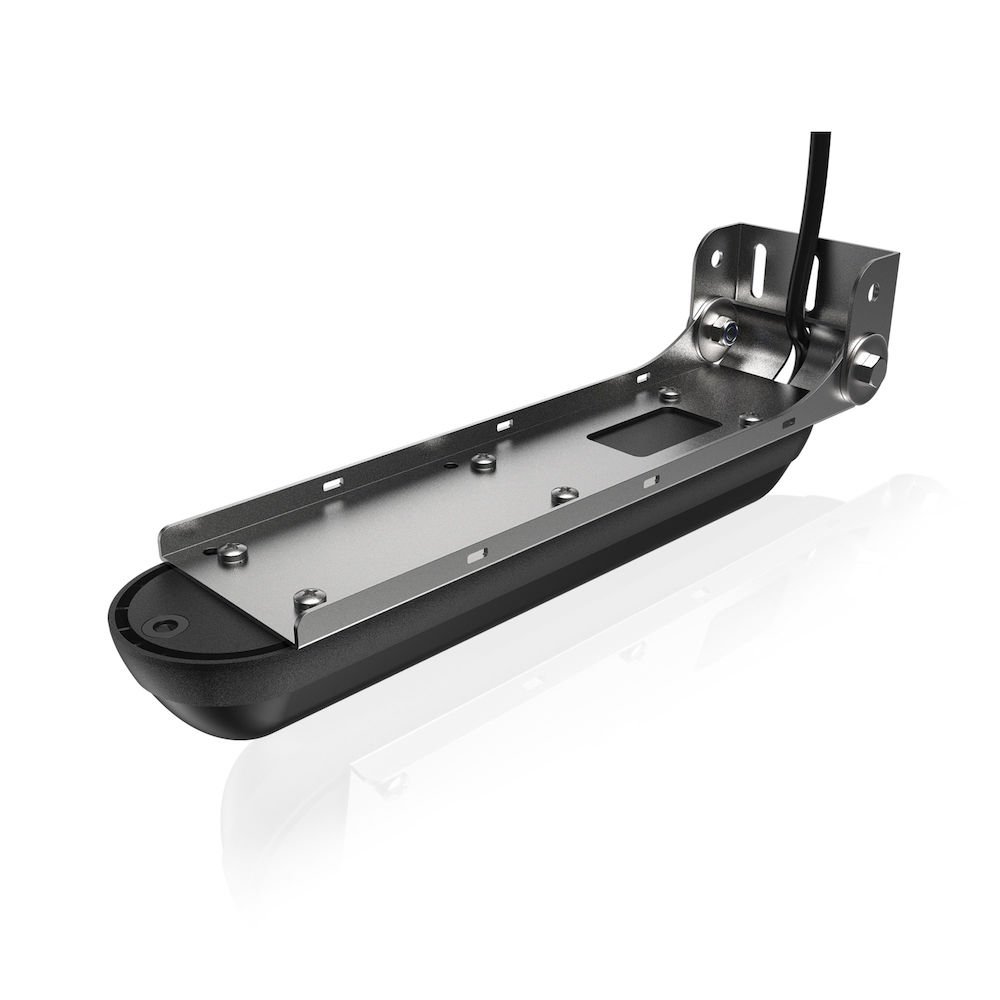
The display itself is broader than the bundle. Its integrated sonar compatibility covers CHIRP, Broadband, Active Imaging DownScan and Active Imaging SideScan, with High, Medium and Low CHIRP and 50/83/200 kHz Broadband available depending on the transducer you connect — which is why a no-transducer version of the Elite FS 9 is also sold, for buyers building around a different transducer. Our Best Transducer for Deep Drop Fishing guide explains why the transducer, not the screen, sets a sounder’s real depth performance.
Two upgrade paths matter here. Active Imaging HD — DownScan at 700 kHz CHIRP and 1200 kHz CHIRP, SideScan at 455 kHz CHIRP and 1075 kHz CHIRP — is listed in the specifications for this unit, but only via an additional S3100 module; it is not built into the standard bundle. And ActiveTarget 2 Live Sonar is listed as compatible, giving real-time views of fish movement, but it is an accessory system with its own transducer, sold separately.
Charts and Genesis Live: Two Layers of Mapping
The Elite FS 9 arrives with charts loaded. The specifications page names the included cartography as C-MAP DISCOVER OnBoard, and the product page’s Key Features describe “Preloaded C-MAP® Discover Onboard™ inland and coastal charts with high resolution, bathymetric 1-foot contours on 15,000+ U.S. Lakes and 9,400+ lakes in Canada”, with C-MAP Easy Routing and Navionics Autorouting capability. One honest note for careful shoppers: Lowrance’s own pages do not all state the lake count the same way — the series page gives a higher U.S. figure — so check the current product page for the coverage statement before you buy on that number. Supported chart options beyond the preload include C-MAP REVEAL, C-MAP DISCOVER, C-MAP Genesis and Navionics (Gold, NAV+ Platinum+), per the specifications page.
The second layer is Genesis Live. Lowrance states that with Genesis Live you can “create custom ½-foot contour maps of your local lake or uncharted water – in real time”, drawn on screen as you fish (the product page lists it as “C-MAP Genesis Live onscreen mapping”). For bottom fishermen, that is the feature that keeps paying off: the ledge, ditch or drop-off the charts show poorly becomes your own half-foot-contour map after one pass over it. The built-in GPS is a 10 Hz internal high-sensitivity receiver (WAAS + EGNOS + MSAS), and the unit stores 3,000 waypoints, 100 routes and 100 trails with up to 10,000 points per trail.
Networking and Boat Control: The Real Reason This Model Exists
This is the section that separates the Elite FS from simpler Lowrance lines. The port list is short and complete: Ethernet at 1 x 100Mbit, NMEA 2000 at 1x Micro-C, internal Wi-Fi (802.11b/g/n) and Bluetooth 4.0. Lowrance’s series page puts the point plainly: “Ethernet networking comes to the Lowrance Elite family, share sonar, charts, waypoints and other user data between multiple displays”, with support and control of NMEA 2000 devices across the boat. Our Deep Drop Fishing Electronics Setup guide shows where a networked display like this sits in a complete offshore electronics plan.
Control runs the other way too. The specifications list autopilot/control support for the Outboard Pilot, Ghost Trolling Motor and Recon Trolling Motor, plus the MotorGuide Xi5/Xi3 (which requires the Motorguide PinPoint Gateway), and the product page adds full touchscreen control of Power Pole anchors alongside the Ghost and Recon motors. The series page also states the displays can “Drive Lowrance HALO dome radars directly” and support live sonar accessories such as ActiveTarget 2 and Active Target 2 XL. In other words, the Elite FS 9 is designed to be the screen the rest of the boat plugs into.
Deep-Water Use: The Number Lowrance Doesn’t Publish
This is the section that matters most on this site, so let’s work only with what Lowrance actually publishes. We checked the manufacturer’s own numbers in the three places they would live: the Elite FS 9 product page, the official Elite FS specifications page, and Lowrance’s official Active Imaging 3-in-1 transducer page. None of them publishes a maximum depth figure — not for CHIRP, not for DownScan, not for SideScan. The specifications page for the 9-inch model contains no depth field at all.
The only range figure Lowrance states for this series is about sideways coverage, not depth. On the series page, Lowrance says of SideScan: “See up to 600ft either side of your vessel, helping you cover more water in a shorter period of time.” Read that carefully: 600 ft to the side, in the horizontal plane, for searching structure. It is not a statement that the unit reads bottom 600 ft down, and Lowrance never presents it as one.
Deep drop fishing — tilefish, snowy grouper, queen snapper and their neighbors — is worked from about 600 ft down to 1,500 ft. Judging a sounder for that work means comparing the manufacturer’s published depth rating for the unit and transducer against those depths, the same test applied throughout our deep drop fish finder guide linked above. The Elite FS 9 cannot pass that test on published evidence, because Lowrance publishes no rating to test. That does not prove the hardware cannot mark deep bottom paired with a suitable deep-water transducer — the display accepts Low CHIRP and 50 kHz Broadband transducers, which are the frequencies deep work uses — but “the manufacturer does not say” is the only honest verdict available, and it is a weak foundation for a purchase whose main job is 600–1,500 ft. If deep dropping is your primary game, buy on a published depth figure: choose a display-and-transducer pairing whose maker states, in writing, a rating that covers your grounds. If your fishing is imaging, charts and networking over ledges, reefs and structure in moderate depths — with deep drop as an occasional experiment rather than the mission — the missing number matters far less.
What’s in the Box / What You Still Need
The headline bundle is the Elite FS 9 display with the Active Imaging 3-in-1 transducer and C-MAP DISCOVER OnBoard charts; a no-transducer version and an ActiveTarget Live Sonar bundle are also sold, so check the exact SKU description before ordering — Lowrance’s product page does not publish a full packing list for each bundle, and the box contents follow the bundle. Beyond the box, budget for:
- An S3100 sonar module if you want Active Imaging HD — the specifications list HD sonar for this unit only via that module.
- An ActiveTarget 2 live sonar system if you want live sonar — compatible with this display, but its transducer is sold separately.
- A microSD card (up to 32 GB) for Genesis Live mapping storage, chart cards and waypoint backups — the slot is there, the card is on you.
- NMEA 2000 and Ethernet cabling to build the network — the ports are on the unit; the backbone and cables are part of the install.
- A deep-water transducer with a published depth rating if you intend to fish deep — the bundled Active Imaging 3-in-1 carries no Lowrance-published depth figure (see Deep-Water Use).
- A fused 12 V supply run — Lowrance specifies a 3 A fuse rating.
Who Should Buy / Who Should Skip
Buy the Elite FS 9 if you want a 9-inch touchscreen-plus-keypad display at the center of a growing Lowrance system, you value SideScan/DownScan imaging with FishReveal, preloaded 1-foot-contour charts and Genesis Live, and you plan to use Ethernet/NMEA 2000 networking, trolling-motor control or an ActiveTarget 2 upgrade.
Skip the Elite FS 9 if deep dropping in 600–1,500 ft is your main game — Lowrance publishes no maximum depth rating for this unit or its bundled transducer, so there is no manufacturer figure to buy on; if you want Active Imaging HD or live sonar included rather than as module-and-transducer upgrades; or if a standalone unit with no networking plans describes your boat better, in which case a simpler display (or a rival like the one in our Garmin ECHOMAP UHD2 73sv review) may fit the budget better.
FAQ
How deep can the Lowrance Elite FS 9 read?
Lowrance does not say. Its official Elite FS 9 product page, specifications page and Active Imaging 3-in-1 transducer page publish no maximum depth figure for the unit or the bundled transducer. Any depth number quoted elsewhere does not come from those official US pages.
Does the Elite FS 9 have SideScan?
Yes. The bundled Active Imaging 3-in-1 transducer provides CHIRP, SideScan and DownScan in one unit, and Lowrance’s series page states SideScan can “See up to 600ft either side of your vessel” — that is side coverage, not a depth rating.
What is the difference between Active Imaging and Active Imaging HD on the Elite FS 9?
Standard Active Imaging runs at 455 kHz and 800 kHz. Per Lowrance’s specifications, Active Imaging HD adds DownScan at 700 kHz CHIRP and 1200 kHz CHIRP and SideScan at 455 kHz CHIRP and 1075 kHz CHIRP — and on the Elite FS 9 it requires an additional S3100 sonar module.
Is ActiveTarget 2 included with the Elite FS 9?
No. The Elite FS 9 is ActiveTarget 2 ready — Live Sonar is listed under compatible systems — but ActiveTarget 2 is a separate accessory system and its transducer is sold separately. A separate Elite FS 9 bundle with ActiveTarget Live Sonar is also listed by Lowrance.
Does the Elite FS 9 come with maps?
Yes. It has a built-in 10 Hz GPS and, per Lowrance’s specifications page, comes with C-MAP DISCOVER OnBoard included; the product page describes preloaded inland and coastal charts with 1-foot contours. It also supports C-MAP REVEAL, C-MAP Genesis and Navionics chart options, plus Genesis Live real-time mapping. It stores up to 3,000 waypoints, 100 routes and 100 trails.
Can the Elite FS 9 network with other displays and control a trolling motor?
Yes. It has Ethernet (1 x 100Mbit), NMEA 2000 (1x Micro-C), Wi-Fi and Bluetooth, and Lowrance states sonar, charts, waypoints and other user data can be shared between multiple displays. Control support listed in the specifications covers the Ghost and Recon trolling motors, the MotorGuide Xi5/Xi3 via the PinPoint Gateway, the Outboard Pilot, and — per the product page — Power Pole anchors from the touchscreen.
Is the Elite FS 9 enough for deep drop fishing?
On published evidence, it cannot be recommended as a primary deep drop sounder. Deep drop grounds run from about 600 ft to 1,500 ft, and Lowrance publishes no maximum depth rating for this unit or its bundled transducer to measure against those depths. It is a strong imaging, charting and networking platform for moderate depths; for dedicated deep drop work, buy a pairing with a manufacturer-stated depth rating that covers your grounds.
The Bottom Line
The Elite FS 9 earns its place as a boat’s connected center: a bright 9-inch touch-and-keypad display, genuine CHIRP/SideScan/DownScan imaging with FishReveal, serious charts with Genesis Live on top, and the Ethernet and NMEA 2000 networking the simpler Lowrance lines leave out — all in the current generation Lowrance sells today, with clear upgrade paths to Active Imaging HD and ActiveTarget 2. Its limit is not a bad number; it is a missing one. Lowrance publishes no depth rating for this unit, and on a site that judges sounders by their stated depth figures, that silence is the verdict deep drop anglers have to respect.