Quick answer
How to deep drop fish: get the boat over the right depth and bottom, bait a multi-hook rig, send enough lead to hit bottom, keep the weight in contact (or just off it), and when you get bites, wind the whole string back to the boat. That’s the whole method. The work is in the setup, the sounder, and not rushing the drop.
If you’re still fuzzy on what this is, read What Is Deep Drop Fishing? first.
Before you leave the dock
Deep dropping is a poor way to “figure it out on the water” with the wrong spool. Check this at the dock, in daylight:
1. Reel and line. Plenty of braid for the depth plus extra. If you fish 800 feet, you need more than 800 feet on the spool. 65–100 lb braid is common. 2. Drag and clutch. Smooth. You don’t want a freeze-up at 900 feet. 3. Rod in a holder that can take load. Bent-butt rods in a rail or chair setup are typical. 4. Rigs built and crimped. Have more than one. Tangles happen. 5. Weights. A few sizes. Current and depth change what you need. 6. Bait. Cut fish or squid that stays on a circle hook. 7. Sounder, GPS, and a plan. Marks or numbers for the depth you want. 8. Safety. PFDs, VHF, extra water, weather window, someone who knows you’re out.
Rig the rods at the dock. Tying 200-pound leader in a 3-foot swell is how you bleed.
Step 1: Find the right water
You’re not looking for a pretty shoreline. You’re looking for a number on the sounder and a type of bottom.
- Mud / soft bottom is where golden tilefish usually make a living.
- Hard bottom, wrecks, ledges hold grouper, snapper, barrelfish.
- The right depth band for the fish you want matters more than a lucky waypoint you copied without knowing why.
How to pick spots in detail is a separate guide: How to Find Fish When You’re Deep Dropping. For a first trip, go with someone who already has numbers, or spend the first hour idling and watching the machine instead of dropping blind on the first 600-foot hole you see.
Step 2: Hold the boat
Deep drop only works if the rig stays near vertical. If you drift too fast, the line scopes out, you lose bottom, and you snag or fish empty water.
Ways people do it:
- Spot-lock / trolling motor if you have the depth rating and battery for it
- Slow idle into wind and current so the line stays close to straight down
- A short drift across a wreck or edge, then run back up and do it again
If the boat is sliding and you can’t feel the weight tick, you’re not deep dropping yet. You’re dragging. Slow down or add lead.
Step 3: Bait the rig
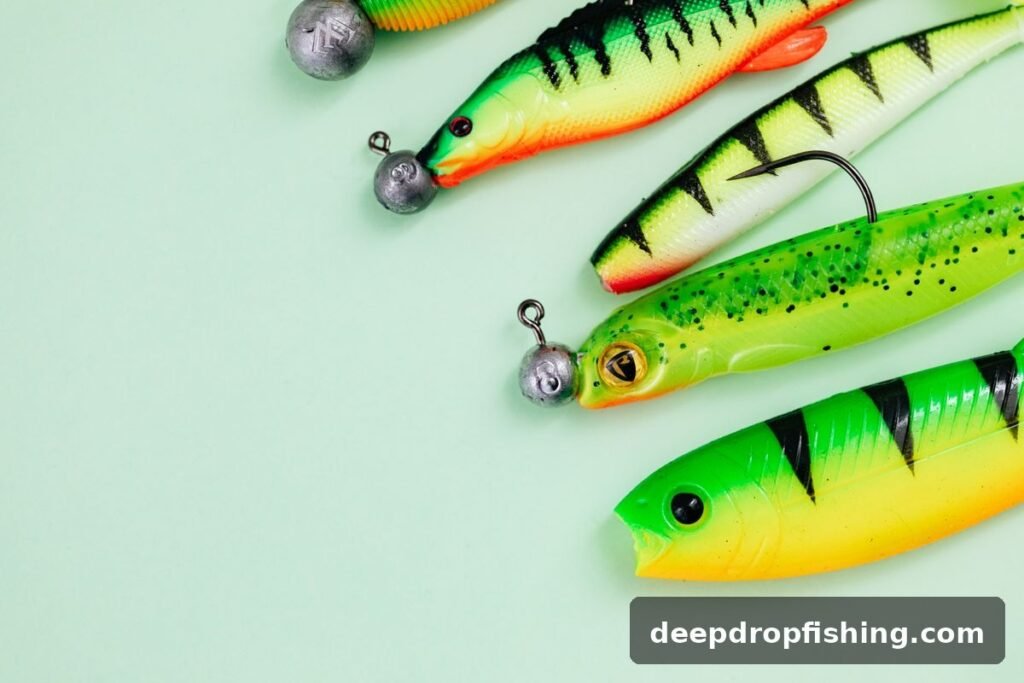
A chicken rig is several hooks above the sinker. Bait every hook. Cut bait should be tough enough to survive the drop. Squid strips, bonito, and similar oily cut baits are standard.
Circle hooks: let the fish eat; don’t reef on them like a J-hook. That’s also the law in a lot of federal reef-fish situations — check the current rule for your water.
Keep spare rigs in a bag, not in a bird’s nest on the deck.
Step 4: Send it down
Clip on enough weight. In current, that’s often 3–8 pounds, sometimes more in 1,000 feet. Too little lead and you never know when you hit.
Free-spool or power the electric down. Watch the line. When the weight hits, the line goes slack or the counter stops making sense the same way. A lot of electrics have a line counter. Learn it before you need it.
Once you’re on bottom:
- Take up slack
- Lift a crank or two so you’re on the bottom without burying the sinker in mud if that’s not the plan
- For tilefish in mud, many people want the rig on that bottom. For a wreck, you may stay just above the snag
If you aren’t sure you hit, you aren’t fishing yet. Drop more, or add weight.
Step 5: Tend the rig
This is the part that looks like nothing.
Keep in contact. If you drift off and the weight hangs in mid-water, you stop catching. If a fish loads the rod, don’t panic-wind into a tangle. Let circle hooks do their job, then come tight.
Bites at that depth can feel like a thump, a heaviness, or the rod just staying loaded. A 1,000-foot stretch of braid mutes everything. That’s another reason people like electric reels with a clicker or a visible load.
Give a drop a fair chance — several minutes, not ten seconds — then decide. Empty bottom is a signal to move, not to sit in hope for an hour.
Step 6: Bring it back
When you decide to wind (fish on, or a dead drop):
- Keep the rod in the holder unless you know what you’re doing with a loaded bent-butt
- Wind at a steady speed
- If you hang, stop. Don’t horse 200-pound leader against a wreck until something expensive lets go. Try a different angle with the boat
- When the rig is high, watch for the lead. That weight will swing
Gaff or net as the fish come. Watch hooks. A chicken rig is a handful of points flying at the transom.
Check fish against size and bag limits before they go in the box. Deep-water reef fish often need a descending device if you’re releasing them from depth. That’s required in some federal Gulf and Atlantic situations. Don’t guess — read the current NOAA/FWC language.
Bait, briefly
You don’t need a secret. You need bait that:
- Stays on the hook
- Has scent
- Is legal to use
Squid, cut bonito, mackerel, and similar baits cover most deep-drop days. If something is eating you off, go tougher, not fancier.
How long does a drop take?
Count down, soak, and up. In 700–1,000 feet, a full cycle can be 10–20 minutes even with an electric reel. That’s why multi-hook rigs exist: one retrieve, more than one chance at a fish.
Plan fewer, better drops. Don’t expect the pace of inshore snook fishing.
Common mistakes
- Not enough lead in current
- Dropping on the wrong bottom for the fish you want
- Drifting so fast you never stay vertical
- One rig, no spare
- Ignoring the sounder and fishing a lucky number from social media
- Keeping the wrong fish because “it came from deep”
- Fishing tired gear — nicked braid and a rusty crimp fail at the worst time
What this is not
This is not a charter pitch. You don’t need us on the boat. You need the steps, the depth, and the bottom. Gear and rigs are next on this site so you can see the pieces without a sales page wrapped around them.
FAQ
How do you know you’re on the bottom? The line stops taking or the counter stops changing the way it did on the way down. The rod may nod when the weight ticks. If you’re unsure, drop more or add weight.
Can you deep drop from shore? Not this kind. This is an offshore boat method.
What’s the best time of day? Deep water doesn’t care about sunrise the way a flat does. Weather, current, and being able to hold the boat matter more. Many people go when the forecast lets them run and sit.
Hand-crank or electric? Hand-crank works shallower and for people who want that fight. Electric is how most dedicated deep dropping gets done past a few hundred feet. See gear.
What if I snag? Stop winding. Move the boat. Don’t horse it. Keep spare rigs. Deep wrecks eat terminal tackle. That’s normal.
Read next
Keep Reading
- What Is Deep Drop Fishing?
- Deep Drop Fishing Gear: The Complete Beginner Setup
- Deep Drop Fishing Rigs: Chicken Rig vs Stiff Rig vs Dropper Rig [2026 Guide]
About DeepDropFishing.com
DeepDropFishing.com is run by Bala, an offshore angler who started with deep drop fishing — electric reels, heavy tackle, and bottom fish in hundreds of feet of water — and now covers offshore and onshore fishing too. The site publishes clear, practical guides on gear, rigs, and technique. It is an independent information site; we do not sell trips or charters.