
Top 5 Editorial Picks
Five current picks chosen for distinct deep drop needs — from a sonar-first 7-inch unit to a premium expandable system and our top electric reel. These are editorial selections, not ratings.
As an Amazon Associate, we earn from qualifying purchases.
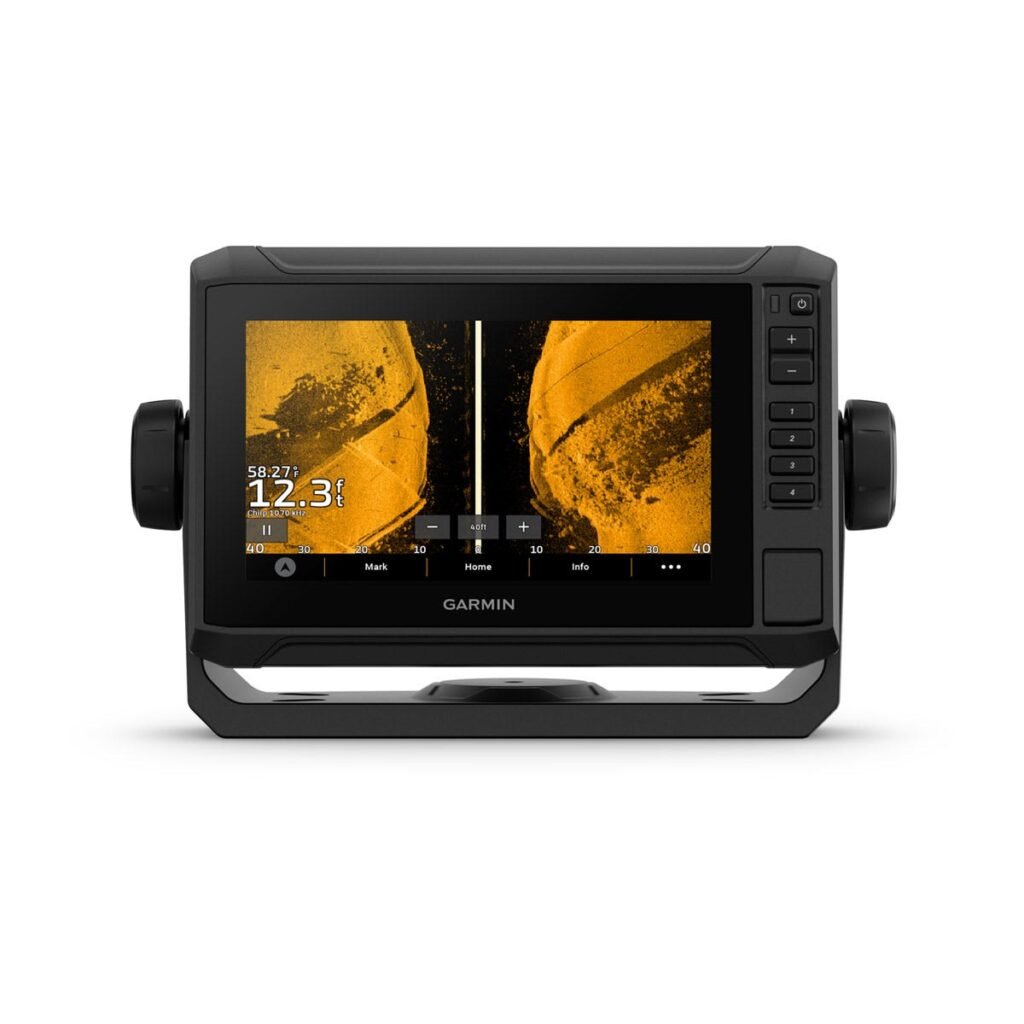
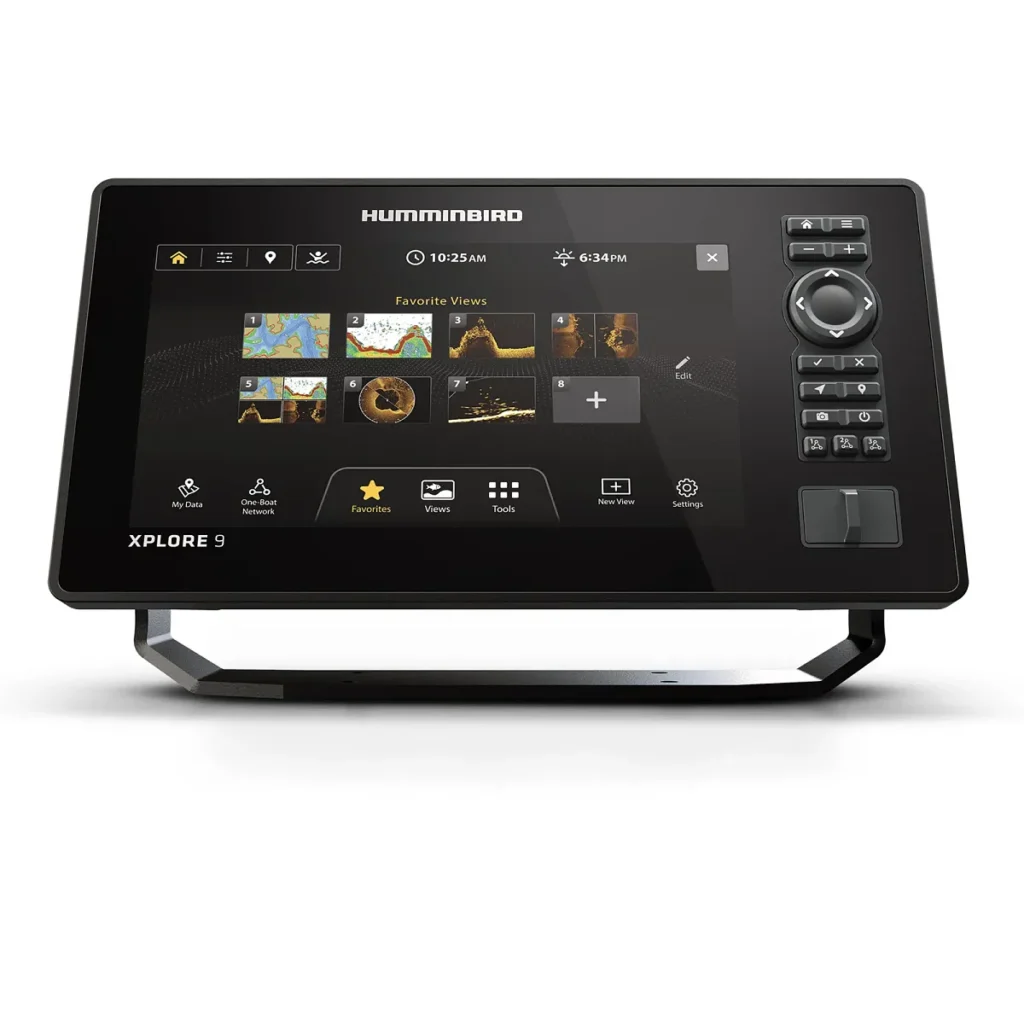
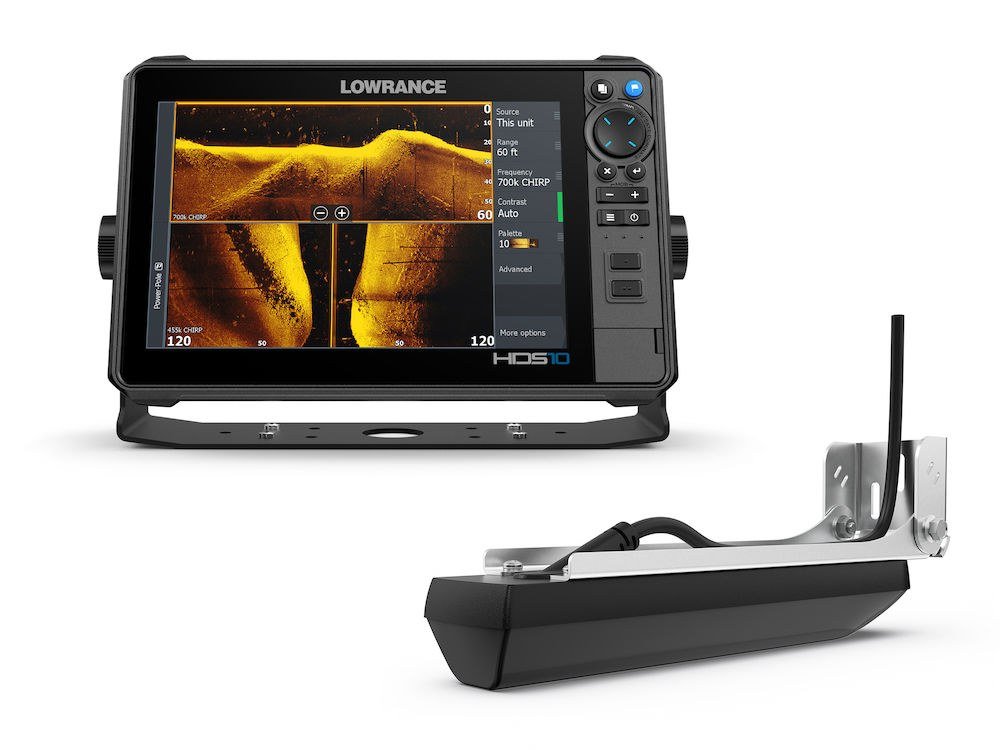
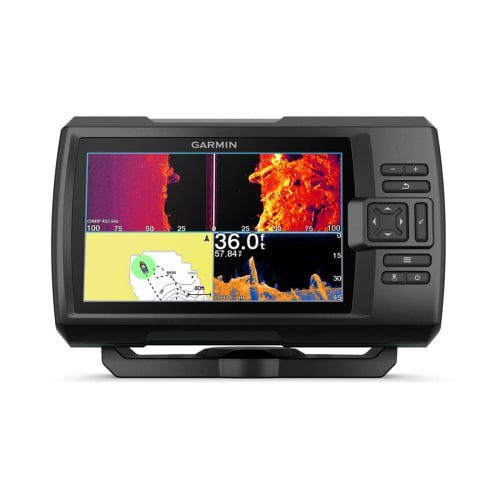
Lowrance Eagle 5 Review
DeepDropFishing.com is reader-supported. When you buy through links on our site, we may earn a commission at no extra cost to you. This review is based on the manufacturer’s published specifications.
Quick Answer
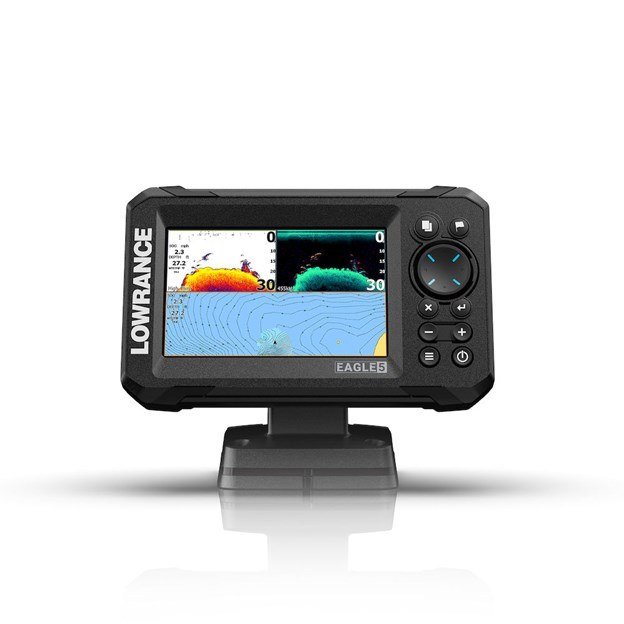
The Lowrance Eagle 5 is a 5-inch fish finder/chartplotter built for easy fishing: an 800 x 480 IPS screen, CHIRP sonar with DownScan Imaging, FishReveal, autotuning sonar that sets itself up, and C-MAP charts with a built-in GPS. Lowrance rates its sonar to a maximum of 500 ft (152 m) at 200 kHz, with DownScan good to 300 ft (91 m). That makes it a strong, simple unit for inshore, nearshore and bottom fishing in moderate depths — but its stated ceiling is well short of true deep drop depths, and that one number should drive your decision.
Who the Eagle 5 Is For
Lowrance calls Eagle its most accessible fish finder, and the design backs that up: a keypad instead of a touchscreen, sonar that tunes itself, and a twist-lock connector that makes the unit easy to fit and remove. If you fish from a small center console, a bay boat, a skiff or a larger kayak and you want clear fish pictures without a weekend spent learning menus, this is the class of unit you are shopping for.
For our readers, the honest framing is this: the Eagle 5 is a nearshore and moderate-depth tool. It will happily work bait schools, reef edges, wrecks and ledges in the shallower part of the water column, and its chartplotter side is genuinely useful for running to marks and back. Where it runs out of road is the deep drop game itself — electric-reel fishing over bottom in 600 to 1,500 ft of water is simply beyond the depth Lowrance states for it. Read our Best Fish Finder for Deep Drop Fishing guide for the units built for that job, and treat the Eagle 5 as what it is: an excellent simple sounder for everything shallower.
Key Specs
| Spec | Lowrance Eagle 5 |
|---|---|
| Display | 5″ IPS, 800 x 480 |
| Controls | 9-way keypad (no touchscreen) |
| Sonar | CHIRP, Broadband, DownScan Imaging |
| CHIRP frequencies | 200 kHz (High), 83 kHz (Medium), 50 kHz (Low) — transducer-dependent |
| DownScan frequencies | 455 kHz / 800 kHz |
| Max depth (manufacturer stated) | 500 ft (152 m) at 200 kHz; DownScan 300 ft (91 m) |
| Transducer (main bundle) | SplitShot HD (CHIRP + DownScan, FishReveal) |
| GPS / charts | Built-in GPS (SBAS), C-MAP Inland Charts included; C-MAP DISCOVER and Genesis Live supported |
| Storage | 3,000 waypoints, 100 routes, 100 trails |
| Card slot | 1 x microSD, up to 32 GB |
| Power | 12 VDC; 280 mA max draw at 12 VDC; 5 A fuse recommended |
| Weight | 0.45 kg (0.99 lb), display only |
| Waterproofing | IPX7 (card door closed) |
| Mounting | Panel mount or bracket mount |
The Display: Small, Bright and Glove-Friendly
Five inches is a compact screen, and Lowrance leans into legibility rather than size: the IPS panel holds 800 x 480 pixels with 85-degree viewing angles in every direction, and Lowrance specifically designs it to stay visible through polarized sunglasses in direct sun — a real consideration on an open boat at midday. Split-screen pages (sonar next to chart, for example) are tight at this size, but the picture itself is not the weak point.
Control is by keypad only. There is no touchscreen to fight with wet hands, spray or fish slime, and the 9-way pad plus dedicated Pages, Waypoint, Zoom and Menu keys covers everything the unit does. Anglers who prefer tapping glass will find it old-fashioned; anglers who fish in gloves or rough weather often prefer exactly this.
Sonar and Transducer: What SplitShot HD Actually Gives You
The headline Eagle 5 bundle pairs the display with the SplitShot HD transducer. In Lowrance’s own definition, SplitShot HD combines wide-angle high CHIRP sonar — the traditional view for finding fish — with DownScan Imaging, the photo-like view that shows how fish relate to structure directly under the boat. On top of that sits FishReveal, which overlays the fish targets from CHIRP onto the DownScan picture so fish stand out against the structure instead of blending into it.
The other name you will see is TripleShot HD, which adds SideScan Imaging to the same CHIRP + DownScan package — Lowrance says SideScan can show up to 600 ft either side of the boat for searching large areas. Here is the catch for Eagle 5 shoppers: in Lowrance’s own series line-up, TripleShot HD bundles start at the 7-inch Eagle 7. The 5-inch model’s published sonar compatibility is CHIRP, Broadband and DownScan — no SideScan. If side-searching is on your must-have list, you are stepping up a screen size, not just changing a transducer.
Lowrance also lists HDI (Hybrid Dual Imaging) versions of the Eagle 5 — 83/200 kHz and 50/200 kHz CHIRP + DownScan transducers — plus a no-transducer version for buyers who already own a compatible unit. Whichever version you pick, autotuning sonar is doing quiet work in the background, adjusting the sonar settings as conditions change so you are not constantly chasing gain and range by hand. Our Best Transducer for Deep Drop Fishing guide explains how much of any sounder’s real performance lives in the transducer choice.
Deep-Water Use: Read This Before You Buy It for Deep Dropping
This is the section that matters most on this site, so let’s work only with Lowrance’s own numbers. Lowrance states a maximum sonar depth of 500 ft (152 m) at 200 kHz, and 300 ft (91 m) for DownScan. Those are the manufacturer’s ceilings, and real-world performance in salt water, current and thermoclines is rarely better than a maker’s best-case figure.
Deep drop fishing — tilefish, snowy grouper, queen snapper and their neighbors — is typically worked from about 300 ft down past 1,000 ft. That means the Eagle 5 covers only the shallow fringe of the deep drop world: the top of a ledge, the first part of a drop-off, inshore wrecks and reefs. Once the bottom falls past roughly 500 ft, Lowrance’s stated capability ends, and no setting changes that. For comparison, the units in our Garmin STRIKER Vivid 7sv review and Humminbird XPLORE 9 review are positioned for deeper work, and our deep drop fish finder guide linked above explains the power and frequency choices behind that.
Used inside its limits, though, the Eagle 5 has a sensible offshore-adjacent role: a second, simple screen for bait and near-bottom structure, a chartplotter for running between spots, and Genesis Live mapping — it can build its own custom half-foot contour charts in real time over ground the charts don’t cover well.
What’s in the Box / What You Still Need
The main bundle is the Eagle 5 display with the SplitShot HD transducer; HDI-transducer bundles and a transducer-less version are also sold, so check the exact SKU description before ordering — the box contents follow the bundle. Beyond the box, budget for:
- A C-MAP DISCOVER card if you want Lowrance’s upgraded coastal chart detail instead of the included inland/basemap coverage.
- A microSD card (up to 32 GB) to save Genesis Live mapping and back up waypoints.
- A fused 12 V supply run — Lowrance specifies a 5 A fuse rating.
- Transom or alternative mounting hardware if your boat setup doesn’t suit the standard bracket arrangement.
Who Should Buy / Who Should Skip
Buy the Eagle 5 if you want a fit-and-forget fish finder for a small boat, you fish mostly inside 300–400 ft, you value a sunlight-readable screen and physical buttons over touch, and you’d rather have the sonar tune itself than learn to tune it.
Skip the Eagle 5 if deep dropping is your main game (its stated 500 ft ceiling is the hard stop), if you need SideScan without stepping up to the Eagle 7 or 9, or if you plan to network the unit into a larger electronics system — Lowrance lists no networking ports on this model at all.
FAQ
How deep can the Lowrance Eagle 5 read?
Lowrance states a maximum depth of 500 ft (152 m) for the 200 kHz sonar, and 300 ft (91 m) for DownScan Imaging. Those are the manufacturer’s published ceilings.
Does the Eagle 5 have SideScan?
No. SideScan on the Eagle series requires the TripleShot HD transducer, and Lowrance’s series line-up offers TripleShot HD bundles on the 7-inch and 9-inch models. The 5-inch model’s published sonar compatibility is CHIRP, Broadband and DownScan.
What is the difference between SplitShot HD and TripleShot HD?
Per Lowrance’s definitions: SplitShot HD combines wide-angle high CHIRP sonar with DownScan Imaging. TripleShot HD includes both of those and adds SideScan Imaging, which Lowrance says can show up to 600 ft either side of the vessel.
Does the Eagle 5 come with maps?
Yes. It has a built-in GPS and comes with C-MAP Inland Charts included (US models carry C-MAP inland coverage of 17,000+ lakes). It also supports C-MAP DISCOVER chart upgrades and Genesis Live, which creates custom half-foot contour maps in real time. It stores up to 3,000 waypoints, 100 routes and 100 trails.
Is the Eagle 5 enough for deep drop fishing?
Not for the depths deep dropping usually means. Lowrance’s stated sonar ceiling is 500 ft, while deep drop grounds commonly run from about 300 ft to well past 1,000 ft. The Eagle 5 can work the shallow end of that range; below its stated ceiling you need a sounder built and rated for deep water.
The Bottom Line
The Eagle 5 does the simple things properly — a readable screen, real CHIRP + DownScan sonar, self-tuning settings and proper charts — and Lowrance is commendably clear about its limits. Respect the 500 ft ceiling in its spec sheet and it’s a tidy little unit; ignore it and buy it as a deep drop sounder, and you’ll be watching the bottom disappear exactly where the fish live.