You mark fish on the sounder, send the rig down, and wait. Nothing. You reel up, check the bait, and everything looks fine — the bait is still on, the leader is not broken, the weight is still there. So you drop again, just as fast, and get the same nothing. On a lot of slow days, the problem is not the spot, the bait, or the fish. The problem is the drop itself.
Dropping too fast deep drop fishing is one of the most common ways anglers talk themselves out of bites they already had. A free-spool fast drop feels efficient. The rig gets to the bottom quickly, you start fishing sooner, and you can make more drops in a day. But speed on the way down comes at a price: the bait arrives tangled, twisted, and looking nothing like food, and it flashes past the very fish you marked on the way down.
Why a Fast Drop Costs You Fish
A fast drop hurts you in three ways, and they stack up on every single drop.
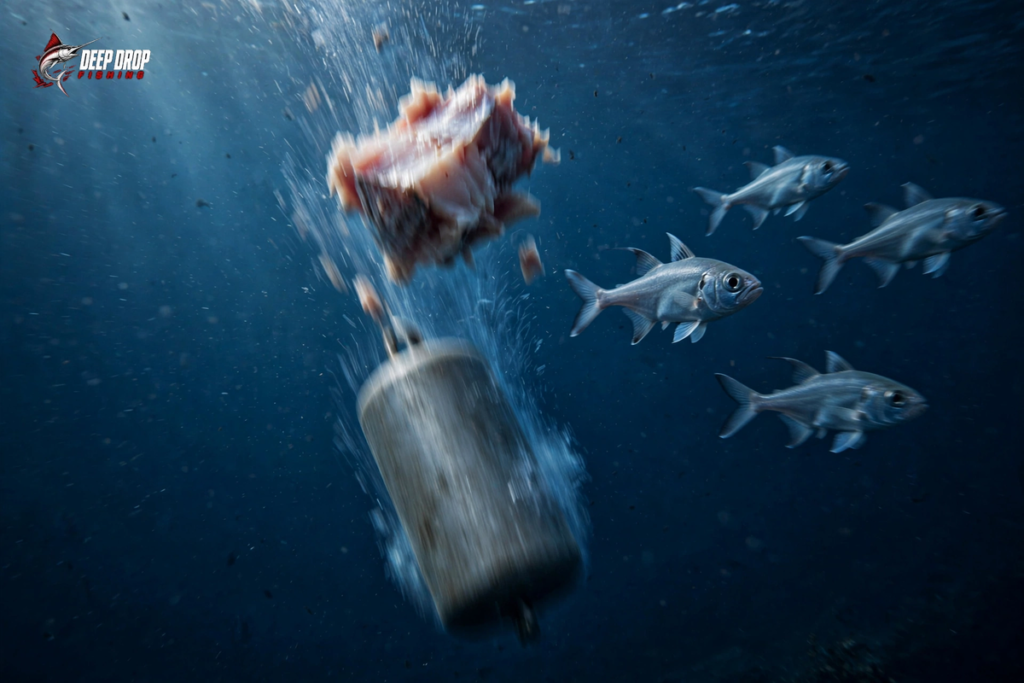
First, it twists the leader. When a rig falls on free-spool with no thumb on the spool, the weight pulls the line down faster than the bait can follow cleanly. The bait starts to windmill — rotating around the line like a propeller. Every rotation puts twist into the leader. Over a drop of several hundred feet, that twist adds up to a leader wrapped around itself or coiled around the main line.
Second, it tangles the bait. A windmilling bait does not fall in a straight line. It swings, helicopters, and loops the leader around the weight and the hook. When it finally reaches the bottom, it may be sitting in a heap instead of hanging clean. A bait buried in its own leader does not get eaten, no matter how good the spot is.
Third, it shoots past mid-water fish. This is the one most anglers miss. The sounder marks fish suspended halfway down, and the instinct is to get the bait to them fast. But a bait screaming past at free-spool speed does not give a suspended fish time to react. The fish sees a blur, turns away, and by the time it decides whether to chase, the bait is gone. A controlled drop keeps the bait in front of those mid-water fish for the whole way down. They can see it, track it, and commit to it — and plenty of deep-drop bites happen well above the bottom, on fish that ate a bait that was still falling.
How to Tell You Are Dropping Too Fast
You cannot watch a rig fall hundreds of feet, but the evidence comes back up with it:
- Twisted leader after retrieval. If the leader comes up coiled, kinked, or wrapped around the main line, the bait was rotating on the way down.
- Tangles at the swivel or the weight. Line wrapped around the swivel, or the leader looped around the weight, is a sign the bait was windmilling on the fall.
- Bait washed out on one side. A bait that tumbles and spins washes out unevenly. One side looks torn up while the other side is barely touched.
- No bites over good marks. If the sounder shows fish at mid-water and at the bottom, and your bait comes back untouched trip after trip, presentation is the first thing to suspect — and drop speed is one of the most common presentation problems.
If you see two or more of these signs, assume the drop is too fast and slow it down before the next one.
Step-by-Step: The Controlled Drop
A controlled drop is not complicated. It is one habit, done the same way every time.
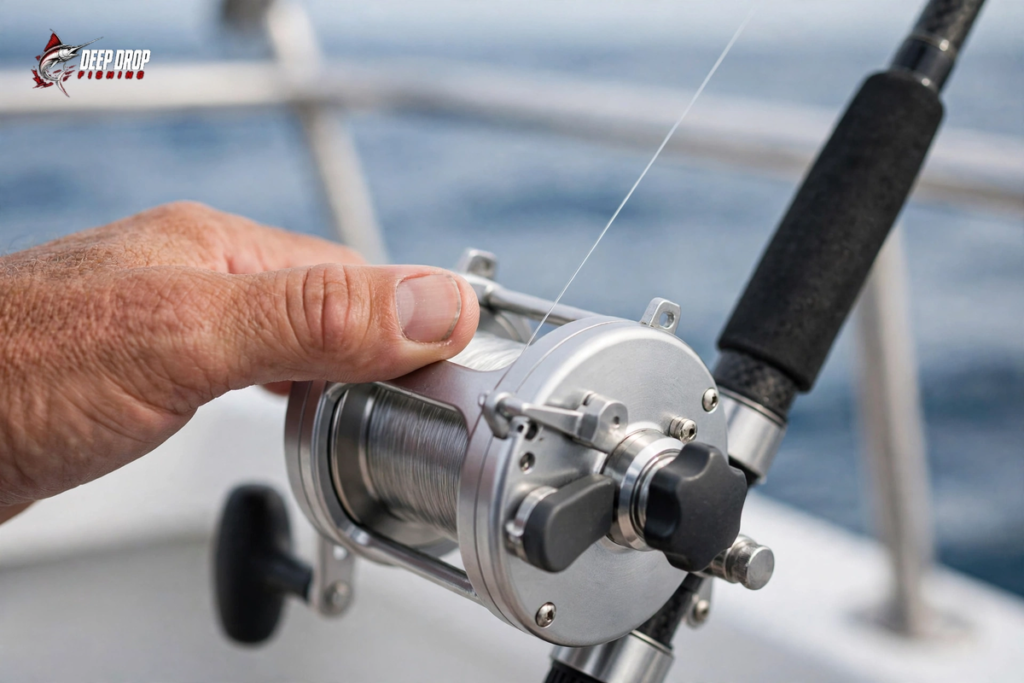
Step 1: Start with the thumb on the spool. Before the rig leaves the boat, rest your thumb lightly on the spool. Do not clamp it down — a light touch is enough to keep the spool from overrunning.
Step 2: Set a steady pace. Let line out at a steady, even speed — fast enough that the rig keeps falling, slow enough that you can feel the weight pulling and the bait trailing behind it. If the spool starts to sing, add a little more thumb. If the rig stalls and the line goes slack, ease off a touch. The right pace feels calm and even, not frantic.
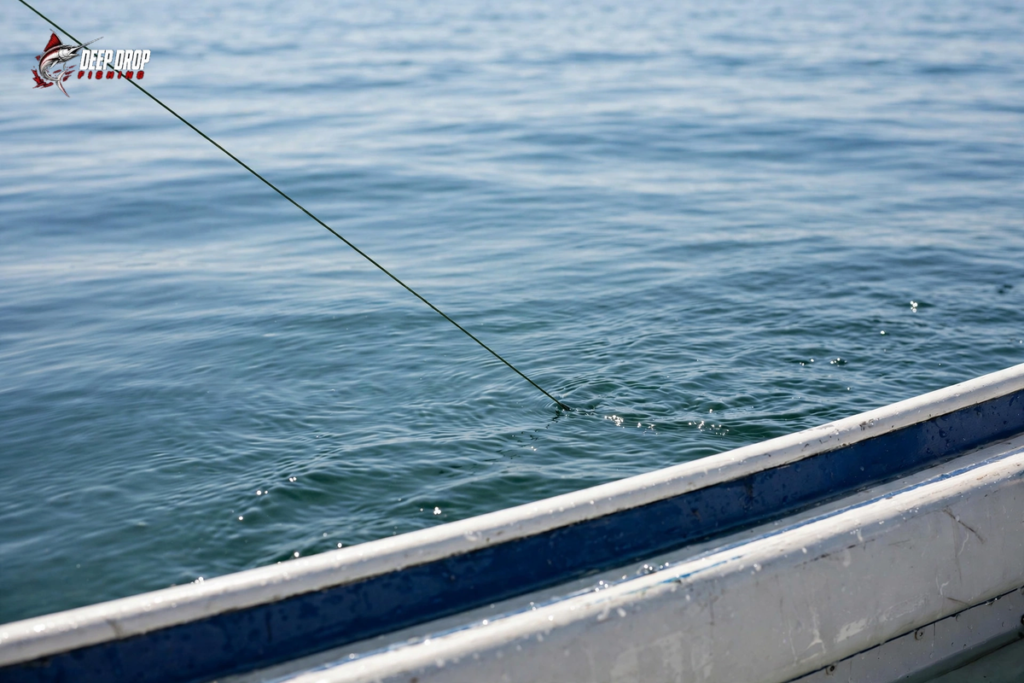
Step 3: Watch the line, not the reel. Keep your eyes on the line where it enters the water. On a controlled drop, the line feeds out at a steady angle and the entry point stays calm, with small, even ripples. If the line starts sawing back and forth or entering at a wild angle, the bait is tumbling below. Add thumb, steady the pace, and let the rig settle before you let it fall again.
Step 4: Pause at the marks. When the sounder shows fish suspended at mid-water, slow the drop further or pause it for a few seconds and let the bait hang right in front of them. This is where a controlled drop earns its keep. A bait that stops in front of a suspended fish, hanging naturally, is an invitation. A bait that rockets past is a missed chance.
Step 5: Feel for the bottom, do not crash into it. As the rig nears the bottom, ease off the pace again and feel for the weight touching down. A rig that slams into the bottom kicks up a tangle and buries the bait. A rig that settles gently lands with the leader straight and the bait hanging clean, ready to be eaten.
Step 6: Check the rig every time it comes up. When the bait comes back, look at the leader before you re-bait. Straight leader, clean bait, no wraps — the drop was right. Coils, wraps, or a washed-out bait — the drop was too fast, and the next one needs more thumb.
Deep-Drop Specifics: Current, Depth, and Weight
In shallow water, a fast drop costs you a little. In deep water, the same mistake is multiplied by depth. A bait that rotates once every few feet rotates hundreds of times on a long drop — hundreds of twists in your leader, and a bait that arrives looking nothing like food. The deeper you fish, the more the drop matters.
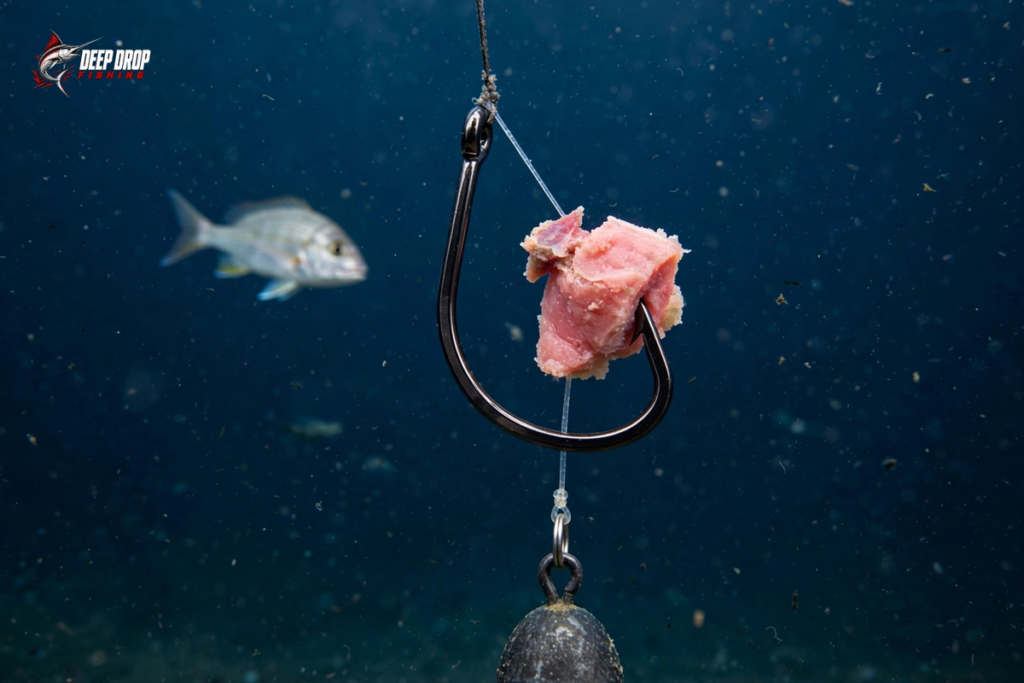
Current makes it worse. A rig dropped into moving water gets pushed sideways as it falls, and a bait that is already tumbling will spin harder in current. This is where weight choice matters: enough weight to hold bottom and keep the rig near vertical, but not so much that you cannot feel the bite.
Weight and drop speed work together. Heavier weights fall faster, which means a heavy rig on free-spool is the fastest, wildest drop of all — and the one most likely to arrive tangled. The heavier the weight, the more thumb the drop needs. The weight gets you down; the thumb keeps the rig clean on the way.
The fix is the same at any depth: a steady, controlled drop, a straight leader, and a bait that trails naturally behind the weight. For the setups behind these choices, see our deep-drop gear and rigs guide.
FAQ
Does a fast drop ever help?
Only in one narrow case: when fish are thick right on the bottom and competing hard for bait, speed can get you into the bite a few seconds sooner. Even then, the bait still has to arrive clean. Most days, a controlled drop out-fishes a fast one, because it keeps the bait in front of fish all the way down instead of flashing past them.
How slow should the drop be?
There is no single number, because current, depth, and weight all change the pace. Use feel, not a stopwatch. The drop is right when the line feeds out steadily, the entry point stays calm, and the rig comes back up with a straight leader. If the leader comes up twisted, slow down further.
Will a controlled drop cost me fishing time?
A little — seconds per drop. A tangled rig costs far more: re-rigging time, lost bait, and drops that never had a chance. The controlled drop is the faster way to fish, measured in bites per trip rather than drops per hour.
Does drop speed matter if my bait is rigged straight?
Yes. A perfectly rigged bait will still windmill if it is sent down on full free-spool, because the weight outruns the bait and the bait starts rotating around the line. Good rigging and a controlled drop work together.
Should I pause at mid-water marks every time?
When the sounder shows fish suspended, yes — slow down or pause and let the bait hang in front of them. Those mid-water fish are often the most willing biters of the day, and they only get a chance at a bait that stays in front of them.
The Bottom Line
Dropping too fast kills bites you already had. A free-spool fast drop twists the leader, windmills the bait, arrives tangled, and shoots past mid-water fish before they can react. The fix costs nothing and takes no extra gear: thumb the spool, drop at a steady controlled pace, watch the line, pause at the marks, and settle gently onto the bottom. Do that on every drop and your bait will trail naturally, stay in front of fish all the way down, and arrive straight and clean.
For more step-by-step deep-drop help, see our deep-drop fishing guides.