
You send the rig down, it feels like a clean drop, and nothing happens. You reel up to find the leader wrapped around itself, the bait chewed on one side, and a tangle at the swivel. More often than not, the culprit is simple: bait spinning on the drop.
A bait that corkscrews on the way down does not look like food. It twists your line, wraps your leader, and arrives at the fish looking wrong. The good news: spin is almost always a rigging problem — and rigging problems can be fixed before the bait ever leaves the boat. Here is why it happens and how to stop it.
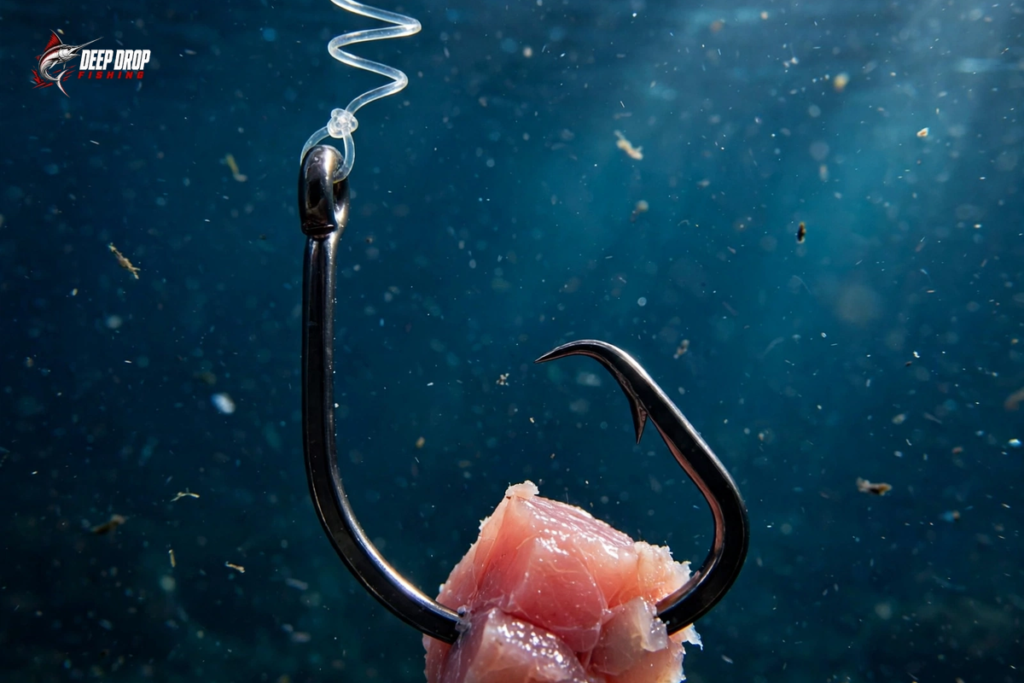
Why a Spinning Bait Costs You Fish
A spinning bait hurts you in three ways that stack up over a long deep drop.
First, it twists your line. Every rotation of the bait puts twist into the leader. Over a drop of several hundred feet, that twist adds up. By the time the bait settles, the leader can be wrapped around the main line or coiled on itself. A twisted leader also means a tangled retrieval, which costs fishing time and sometimes the rig.
Second, it tangles the rig. A spinning bait does not fall in a straight line. It helicopters, swings, and can loop the leader around the weight or the hook. When it finally lands, it may be sitting in a heap instead of hanging clean. A bait buried in its own leader does not get eaten.
Third, and most important, it looks wrong to the fish. Deep fish eat wounded baitfish, squid, and cut bait falling naturally through the water. A chunk that pinwheels down looks like nothing a fish recognizes as food. It may draw a curious look, but curious fish that do not commit are the same as no fish. A bait that falls straight and steady, by contrast, looks like an easy meal — and easy meals get eaten.
None of this is bad luck. Spin is a symptom of an unbalanced rig, and balance is something you control.
How to Tell Your Bait Is Spinning on the Drop
You cannot watch a bait fall 800 feet, but the evidence comes back up with the rig:
- Twisted leader after retrieval. If the leader comes up coiled or wrapped around the main line, the bait was rotating on the way down, on the way up, or both.
- Tangles at the swivel. A swivel that comes up with line wrapped around it is another sign of rotation.
- Bait mangled on one side. A bait that spins tends to wash out unevenly. One side looks torn up while the other side is barely touched.
- No bites over good marks. If the sounder shows fish and your bait comes back untouched trip after trip, presentation is the first thing to suspect — and spin is one of the most common presentation problems.
If you see two or more of these signs, assume the bait is spinning and fix the rig before the next drop.
Step-by-Step: Rig It Straight
A straight bait starts with balance. Work through these steps in order, every time.
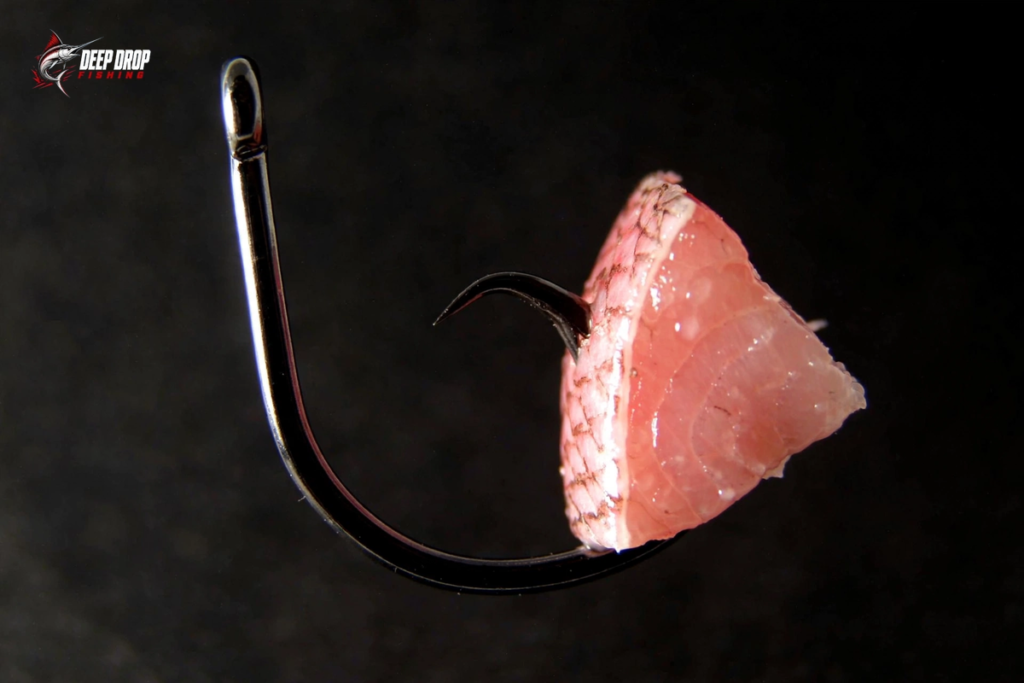
Step 1: Pick the firm side. Cut bait has a firm side (skin side or dense flesh) and a soft side. Hook through the firm side. Soft flesh tears, shifts, and lets the bait flop to one side — and a bait that hangs crooked starts spinning the moment it starts falling.
Step 2: Hook through the meaty, firm section. Pass the hook through a solid part of the chunk, not a thin edge. The hook should enter and exit through balanced amounts of flesh so the bait hangs level. If the bait tilts to one side on the hook, pull it off and re-hook it. A tilt at the surface becomes a spin at depth.
Step 3: Balance-check the bait. Hold the rig up by the leader and look at the bait. It should hang straight and still, not lean, twist, or swing to one side. If it leans, the hook is off-center. Re-rig it. Ten seconds here saves a wasted drop.
Step 4: Check the leader. Lay the leader out straight. Remove any kinks, coils, or twists from the last drop. Make sure the swivel turns freely. A leader that starts the drop twisted will only get worse on the way down.
Step 5: Slow the drop. A rig sent down on free-spool falls fast and can start windmilling. Thumb the spool and let it fall at a steady, controlled pace. A slower drop keeps the leader straight and the bait trailing naturally behind the weight, in front of fish all the way down instead of flashing past them.
The Boat-Side Sink Test
Before you commit to a long drop, test the bait beside the boat. Lower the rig just below the surface, hold it still, and watch it sink for the first ten to fifteen feet.
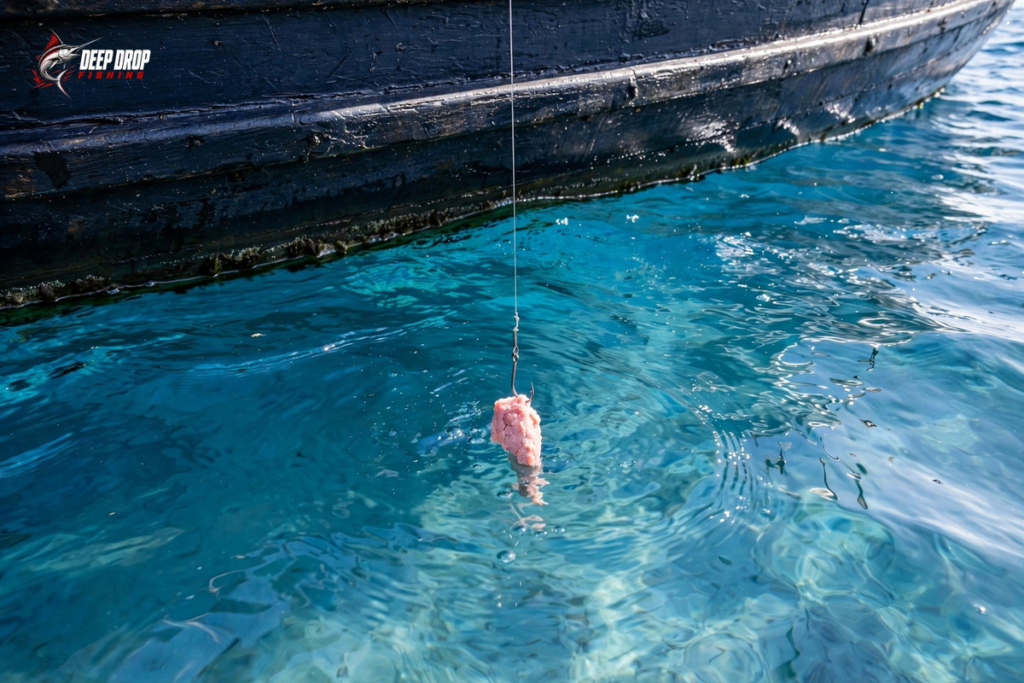
- It sinks straight: good to go. Send it down.
- It turns, tilts, or starts rotating: pull it up and re-rig it. Do not hope it straightens out on the way down — it will not. Spin only gets worse with depth.
This test takes fifteen seconds and tells you more than guessing. Make it a habit on every drop, especially after changing bait or hook size.
When to Bridle a Big Chunk
Small and medium chunks usually ride fine on a well-placed hook. Big chunks are a different story. A large chunk has more weight, more drag, and more leverage to roll off-center — which makes it the worst spinner of all.
For a big chunk, bridle it. A bridle is a short loop of rigging thread or floss passed through the bait with a rigging needle, with the hook passed through the loop instead of through the flesh. The bait hangs from the loop, the hook rides free, and the whole bait stays balanced and straight. Three advantages follow: the bait cannot slide down the hook and go crooked, the hook point stays fully exposed, and the bait stays on longer because the hook is not tearing through soft flesh.
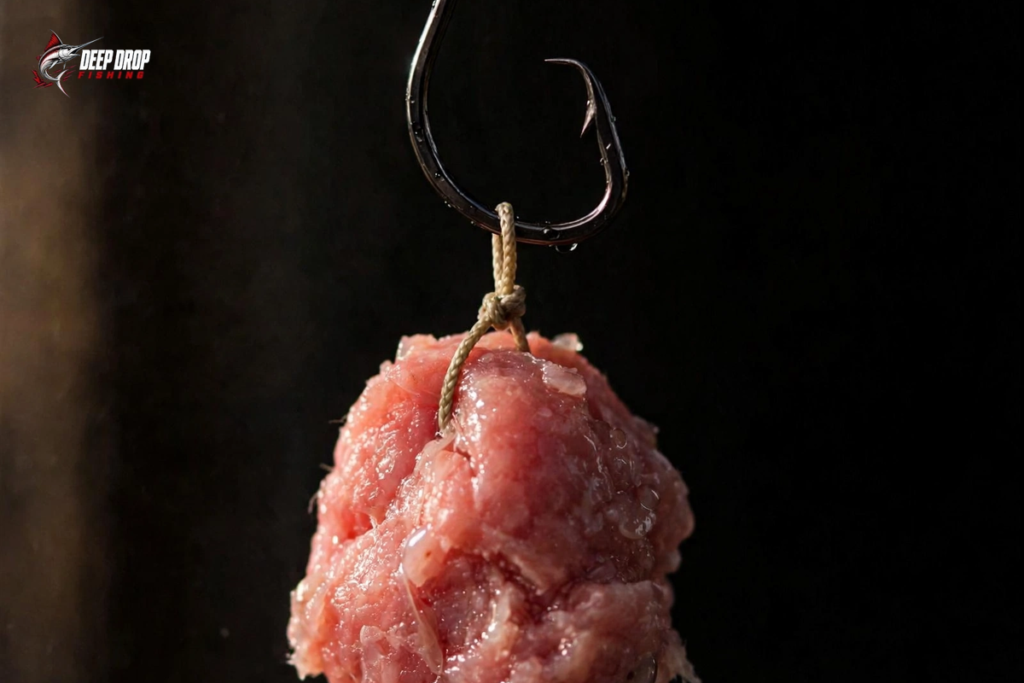
If you fish big baits and you are not bridling, that is the first change to make.
Deep-Drop Specifics: Current, Depth, and Weight
In shallow water a small rigging flaw costs you a little. In deep water the same flaw is multiplied by depth. A bait that rotates once every few feet rotates hundreds of times on a long drop — hundreds of twists in your leader, and a bait that arrives looking nothing like food.
Current makes it worse. A rig dropped into moving water gets pushed sideways as it falls, and a bait that is already off-balance will spin harder in current. This is where weight choice matters: enough weight to hold bottom and keep the rig vertical, but not so much that you cannot feel the bite. A rig that drifts and swings in current is a rig that tangles.
The fix is the same at any depth: a balanced bait, a straight leader, and a controlled drop. Get those three right, and the depth stops working against you. For the setups behind these choices, see our deep-drop gear and rigs guide.
FAQ
Does a spinning bait ever attract fish? Flash and movement can draw a look, but a spinning chunk rarely converts that look into a bite. Fish commit to bait that looks like food. A straight, natural fall out-fishes a spinning bait almost every time.
Can I fix spin without re-rigging? Sometimes. Slowing the drop and letting the rig settle can help if the spin is mild. But if the bait spins on the boat-side sink test, re-rig it. A bait that starts spinning at the surface will not fix itself at depth.
Does bait size matter? Yes. Bigger chunks spin harder, tangle worse, and wash out faster. The bigger the bait, the more it pays to bridle it and to run the sink test before the drop.
Circle hook or J-hook — does it matter for spin? Either hook can spin if the bait is rigged off-balance, because spin comes from the bait, not the hook. That said, circle hooks pair well with bridled baits: the hook rides free in the bridle loop, the point stays clear, and it sets in the corner of the mouth when the fish turns away.
The Bottom Line
Bait spinning on the drop is not a mystery and it is not bad luck. It is an unbalanced rig, fixed at the boat: hook through the firm side, balance-check the bait, run the sink test, bridle the big chunks, and drop at a controlled pace. Do that on every drop and your bait will arrive straight, clean, and looking like food.
For more step-by-step deep-drop help, see our deep-drop fishing guides.