You drop all the way down, settle on the bottom, and wait. Twenty minutes later you reel up to find the bait untouched — not nibbled, not washed out. Meanwhile the sounder showed fish when you arrived. So where did they go?
They did not go anywhere. They were above you the whole time.
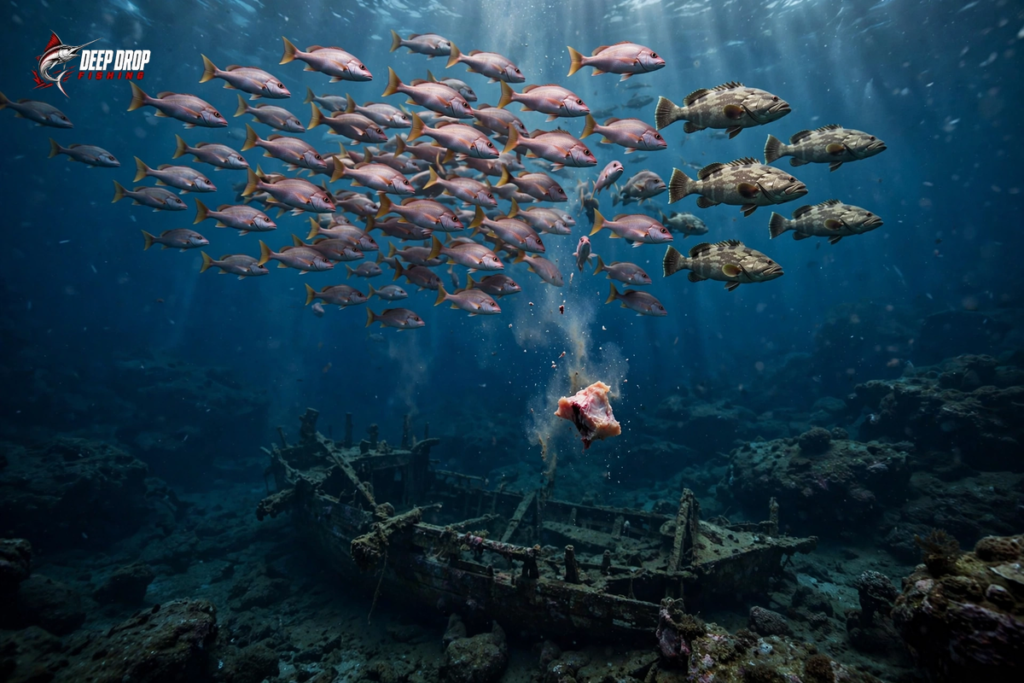
Deep fish do not always hug the wreck or the ledge. A lot of the time they hang suspended in the water column, feeding on bait drifting past well above the structure. Your bait on the bottom sat below a school that never saw it and never had a reason to come down to it. You fished the right spot and the wrong depth — the most frustrating way to blank a drop.
Why Fishing Only the Bottom Costs You Fish
The bottom-first habit makes sense. The wreck is on the bottom, the ledge is on the bottom, and every waypoint points at structure on the seafloor — so the bait goes to the seafloor. But the fish are not always where the structure is. They are where the food is — and the food moves.
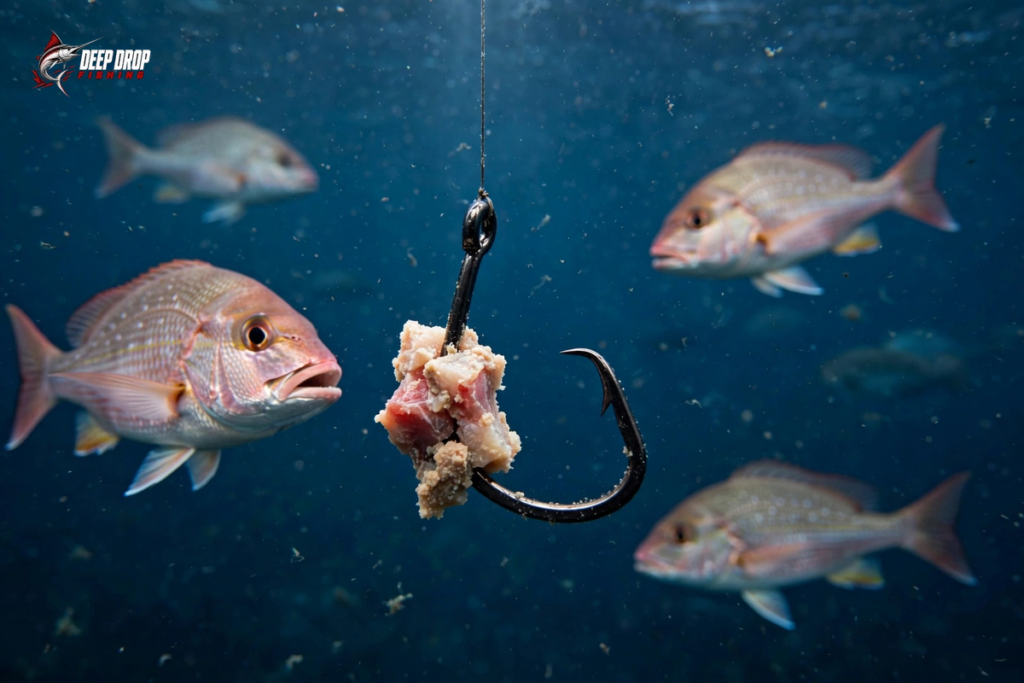
Suspended fish feed in the column, not on the bottom. Baitfish, squid, and small jacks ride the current above a wreck or along a ledge, and the predators follow them. A grouper feeding twenty feet above the structure will not drop to the bottom to inspect a bait it cannot see. It is locked on the bait school in front of it.
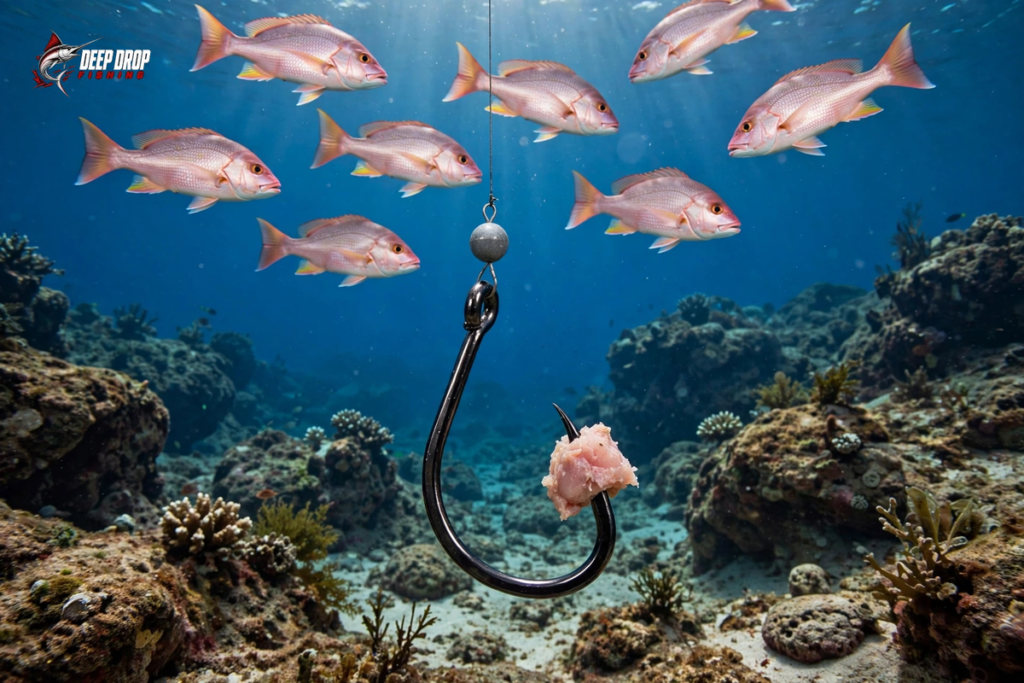
A bait below the school is invisible. Fish look up and ahead far more than they look down. A bait on the bottom beneath a suspended school is below their line of sight and often below the scent trail the current is carrying. From the fish’s point of view, your bait does not exist.
The bottom is where the competition lives. The fish that hug the bottom over a hard-fished wreck are often the small ones, the pickers, and the species you did not come for. Your bait gets stripped by fish you do not want while the better fish feed overhead.
And it costs you drops. A deep drop is a long round trip. Soaking a bait in dead water burns time, bait, and energy. When you finally move up and get bit, you realize the fish were there all along — you just spent three drops fishing under them.
None of this means the bottom never holds fish. Some days it is exactly where you should be. But fishing only the bottom on every drop is a guess. Fishing the column turns it into a search — and a search finds fish.
How to Tell the Fish Are Suspended
The signs are right in front of you:
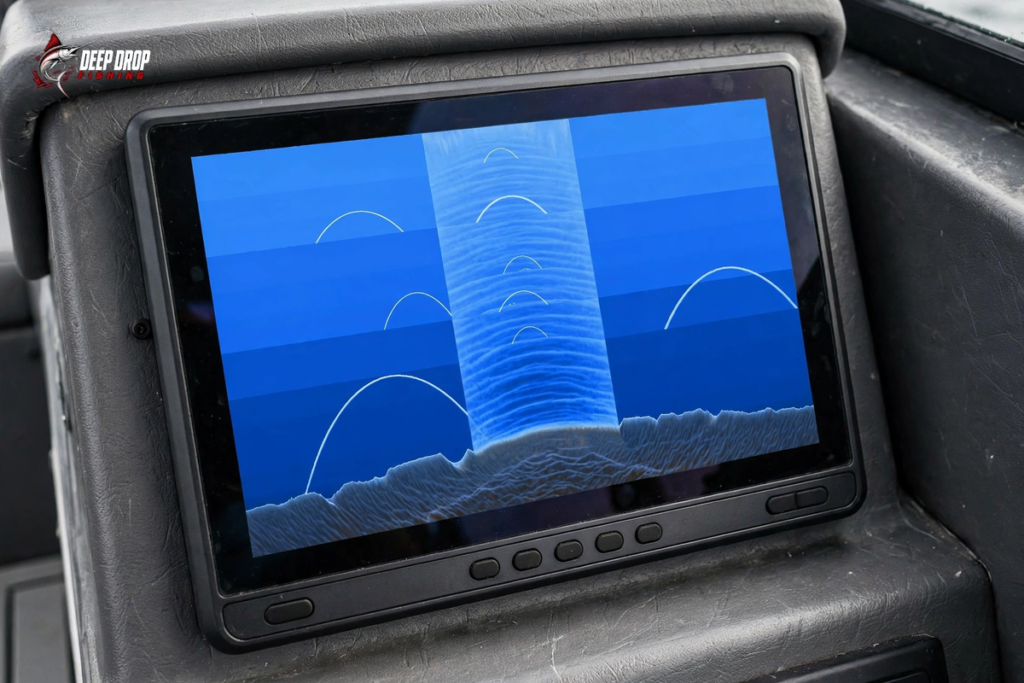
- Marks hanging above the structure on the sounder. Arches or clouds suspended ten to thirty feet above the wreck or ledge — with clear water between them and the bottom — are suspended fish. Do not drop past them and park on the bottom. Stop at their depth.
- Bites on the way down. If the rod loads up while the rig is still falling, the fish are in the column. Note the depth where it happened. That is your starting depth for the next drop, not the bottom.
- Untouched bait on the bottom, marks on the screen. When the sounder shows fish and the bait comes back untouched trip after trip, your bait is not where the fish are. Usually the fish are suspended and the bait is underneath them.
- Bait schools showing mid-water. Clouds of bait holding above the structure mean predators are nearby and feeding in the column. Find the bait school on the sounder, and you have found the depth to fish.
- Catches from other anglers fishing higher. If the boat next to you is hooked up on rigs fished well off the bottom, match the depth, not the spot.
If you see two or more of these signs, stop fishing only the bottom. The fish are telling you where they are.
Step-by-Step: One Drop, Three Depths
You still make one drop. You just fish it in steps on the way back up instead of parking on the bottom and waiting.
Step 1: Drop all the way down. Start every drop the same way: send the rig all the way to the bottom. This confirms the true depth and that you are on the structure. Touch bottom, then start working up.
Step 2: Crank up ten feet and hold. Reel up about ten feet off the bottom and hold there. Give it a real soak — a few minutes, not a few seconds. Keep the line tight. A lot of fish that hug structure will eat a bait held just above it.
Step 3: Crank up to twenty feet and hold. If the ten-foot stop produces nothing, reel up another ten feet and hold again. Same deal. You are now fishing right in the zone where suspended fish often hold over a wreck or ledge.
Step 4: Crank up to thirty feet and hold. Still nothing? Go up another ten feet and hold. Thirty feet above the bottom sounds far from the structure, but suspended fish routinely hold this high when the bait is up there.
Step 5: Stop where the marks are. The three stops are a starting pattern, not a rule. If the sounder shows marks at fifteen feet above the bottom, fish fifteen feet. If the marks are at forty, fish forty. The steps get you into the column; the sounder tells you exactly where to stop. When you find the depth that produces, stay there until the marks move or the bite stops.
Step 6: Work that depth on every drop. Once you have found the fish, every drop after that goes straight to the productive depth. Drop to the bottom to confirm position, crank straight up to the mark, and fish it. No more soaking dead water at depths where the fish are not.
That is the whole method: drop down, fish up in steps, stop where the marks are. One drop, three depths.
Deep-Drop Specifics: Current, Depth, and Weight
Current changes how this works, and it changes fast in deep water. A rig dropped into moving water does not fall straight down — it drifts. By the time it reaches the bottom, it may be well behind the boat and off to one side of the structure. When you crank up into the column, the rig is already swept off position, so check the sounder often and adjust.
Weight matters more in the column than on the bottom. On the bottom, the weight just holds position. In the column, the weight is what keeps your bait at the depth you chose. Too light, and the current sweeps the rig up and away from the marks before the fish find it. Too heavy, and the rig drops like a stone and you blow past the suspended fish before you can stop. You want enough weight to hold your depth and keep the line close to vertical, but not so much that you cannot feel the bite. When the current picks up, go heavier. When it slacks, go lighter. For the setups behind these choices, see our deep-drop gear and rigs guide.
Depth changes the stakes, too. In shallow water, reeling up ten feet is a small move. In deep water, the column is tall and the fish can hold at any level in it. A bait that only fishes the bottom leaves most of the column unfished.
FAQ
Do suspended fish ever come down to a bottom bait?
Sometimes. If the fish are feeding near the bottom and just happen to be a few feet up, a bottom bait can pull them down. But fish feeding well up in the column rarely leave a bait school for a bait on the bottom. Go to them.
How long should I hold at each depth?
Give each stop a real soak of a few minutes. A quick dip of thirty seconds is not a test — the bait needs time to settle and the scent needs time to carry. If a stop produces nothing after a proper soak, move up to the next one.
What if the sounder shows marks at several depths?
Start with the thickest marks or the depth closest to a bait school. If it produces nothing after a proper soak, move to the next mark.
Does fishing mid-water column work for every species?
It works best for predators that follow bait in the column — snapper, grouper, amberjack, and similar species that feed above structure. True bottom-dwellers that live tight to the wreck will still want a bait on or near the bottom. The method is not about abandoning the bottom — it is about checking the whole column first.
The Bottom Line
Fishing only on the bottom is a habit, not a strategy. Deep fish often hang suspended above the wreck or ledge, feeding in the water column — and a bait parked on the bottom sits below a school that never sees it. The fix: drop all the way down, then crank up and fish in steps. Hold ten feet up, then twenty, then thirty. Watch the sounder, stop where the marks are. One drop, three depths.
For more step-by-step deep-drop help, see our deep-drop fishing guides.